
Trail Blazer: Dirt Track Challenge
Review
Trail Blazer: Dirt Track Challenge stands out for its tight physics and well-paced difficulty curve. The controls are responsive, and the tilt-based mobile steering works surprisingly well. Collecting tokens to unlock better bikes gives each run a clear purpose beyond simply finishing. The courses are short but challenging, making it easy to pick up for a few minutes. While the visual style is simple, the gameplay loop is engaging enough to keep players returning for one more attempt. It is a solid choice for fans of skill-based racing games.
About
Course Layout & Environment
Trail Blazer: Dirt Track Challenge places riders on a series of increasingly difficult offroad circuits. Each course features natural obstacles such as steep inclines, loose gravel, and sharp turns that test the player's ability to maintain momentum and balance. The environment shifts as players advance, introducing tighter corners and steeper drops that require precise throttle control. Courses are designed to reward careful observation and consistent practice rather than reckless speed.
Vehicle Handling & Upgrades
The game simulates realistic motorcycle physics, where leaning into turns and managing acceleration are key to staying upright. Players can earn tokens by collecting items scattered along the track. These tokens can be used to unlock improved bikes with better suspension, stronger engines, or enhanced traction. Each upgrade alters the bike's handling characteristics, allowing players to tailor their ride to match the demands of specific courses.
Control Options & Accessibility
Trail Blazer offers multiple control schemes to suit different devices. On desktop, the keyboard arrows manage acceleration, braking, and balance. For mobile play, the game uses the device's tilt sensors to steer the bike, with on-screen buttons for throttle and brake. The interface is clean and unobtrusive, keeping the focus on the track ahead. A full-screen mode is available to reduce distractions and improve immersion.
Progression & Challenge Curve
The game structures its difficulty around a clear progression system. Early courses serve as a tutorial, teaching basic balance and turning. Later tracks introduce more complex sequences of obstacles that demand faster reflexes and better anticipation. Each run ends upon a single fall, encouraging players to learn from mistakes and refine their approach. This design creates a satisfying loop of short attempts followed by incremental improvement.
Visual Style & Performance
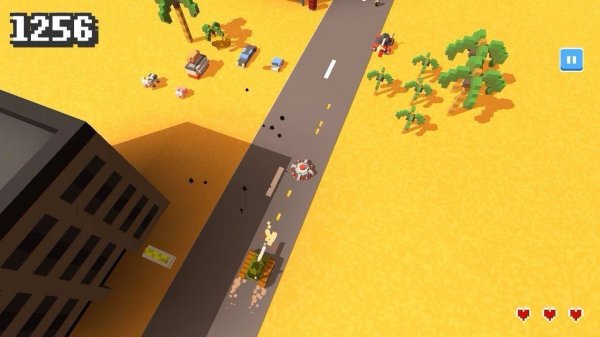
The 3D graphics present a stylized offroad world with clear visual cues for upcoming terrain changes. The color palette uses earthy tones that complement the dirt track theme without being distracting. The game runs smoothly in standard web browsers on both desktop and mobile devices, with no noticeable lag during fast-paced sections. Performance remains consistent even on older hardware, making it accessible to a wide audience.





Comments
Sign in to leave a review
You must be logged in before posting a review or rating.
No account? Create one
No comments yet. Be the first to comment!