
Stick the Landing: A Coordination Challenge
Review
Stick the Landing succeeds by keeping its design simple and its difficulty curve smooth. The core mechanic of placing projectiles on a rotating target is immediately intuitive, yet the increasing speed and crowding keep each attempt fresh. The lack of clutter in the interface and the subtle audio cues help maintain focus. It is a great choice for anyone looking to sharpen their reflexes without committing to a long play session.
About
Core Objective
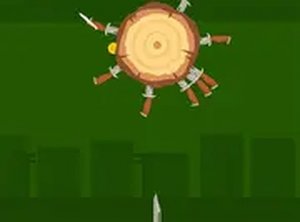
In Stick the Landing, players aim to attach projectiles to a rotating surface. Each successful placement adds to the challenge because the target becomes more crowded. The goal is to keep going as long as possible without causing a collision. This straightforward premise creates a loop that is easy to understand but hard to put down.
Difficulty Curve
The game begins at a relaxed pace, allowing newcomers to get comfortable with the timing. After a few successful throws, the rotation speed gradually increases. More projectiles on the target also reduce the available open space. This combination means that each session feels different, and players must constantly adapt their strategy.
Visual and Audio Design
The interface is clean and uncluttered, putting the focus entirely on the target and the projectile. Colors are chosen to provide clear contrast between the target, embedded projectiles, and the background. Subtle sound effects provide feedback for each successful placement and for when a throw misses, helping players stay in the rhythm without distraction.
Platform and Accessibility
Stick the Landing runs in any modern web browser on both mobile phones and desktop computers. There is no need to download an app or install any software. The controls are the same across all devices: a single tap or click releases the projectile. This makes the game accessible to players of all ages and skill levels.
Session Length and Replay Value
Each attempt lasts anywhere from a few seconds to several minutes, depending on the player's skill. The game is designed for quick sessions during a short break, but the increasing difficulty encourages repeated attempts to beat personal bests. A scoring system tracks performance, giving players a clear goal to improve upon.
Mindset and Approach
Success in Stick the Landing depends more on patience than speed. Rushing a throw often leads to a mistake. Observing the target's rotation pattern and waiting for the right moment is more effective than trying to force a placement. This makes the game a good exercise in concentration and self-control.
Comments
Sign in to leave a review
You must be logged in before posting a review or rating.
No account? Create one
No comments yet. Be the first to comment!